Case study
- Web application
- Online payment
A custom gallery and ordering system for kindergarten photography
The system followed the photographer's everyday work from the private gallery through ordering, payment and invoicing to processing the purchased photographs.

- Client
- Illyés Andrea BernadetteKindergarten and school photographer
- Our work
- Planning, shared UX decisions, frontend and backend development
Starting situation
The client photographed children in kindergartens and schools, then sold the photographs to their families. Customers generally paid in cash, while orders arrived on paper or by email.
Recording the orders, invoicing and preparing the photographs meant up to two weeks of administrative work each season, using folders and hand-drawn tally marks. Much of this was mechanical work that did not require the photographer's professional expertise.
The institutions also carried a substantial burden because they had to collect the money. Parents previously chose from index images, so they could not conveniently review every photograph from the session.
The first version we planned together
Having experienced the repetitive parts of the work herself, the client knew exactly what the system needed to do. She could explain which parts could be automated and what would make everyday work easier.
The first version covered the complete workflow from the photography session to processing the order:
- After the photography session, the group received the private gallery link, and the photographer controlled when the photographs were available.
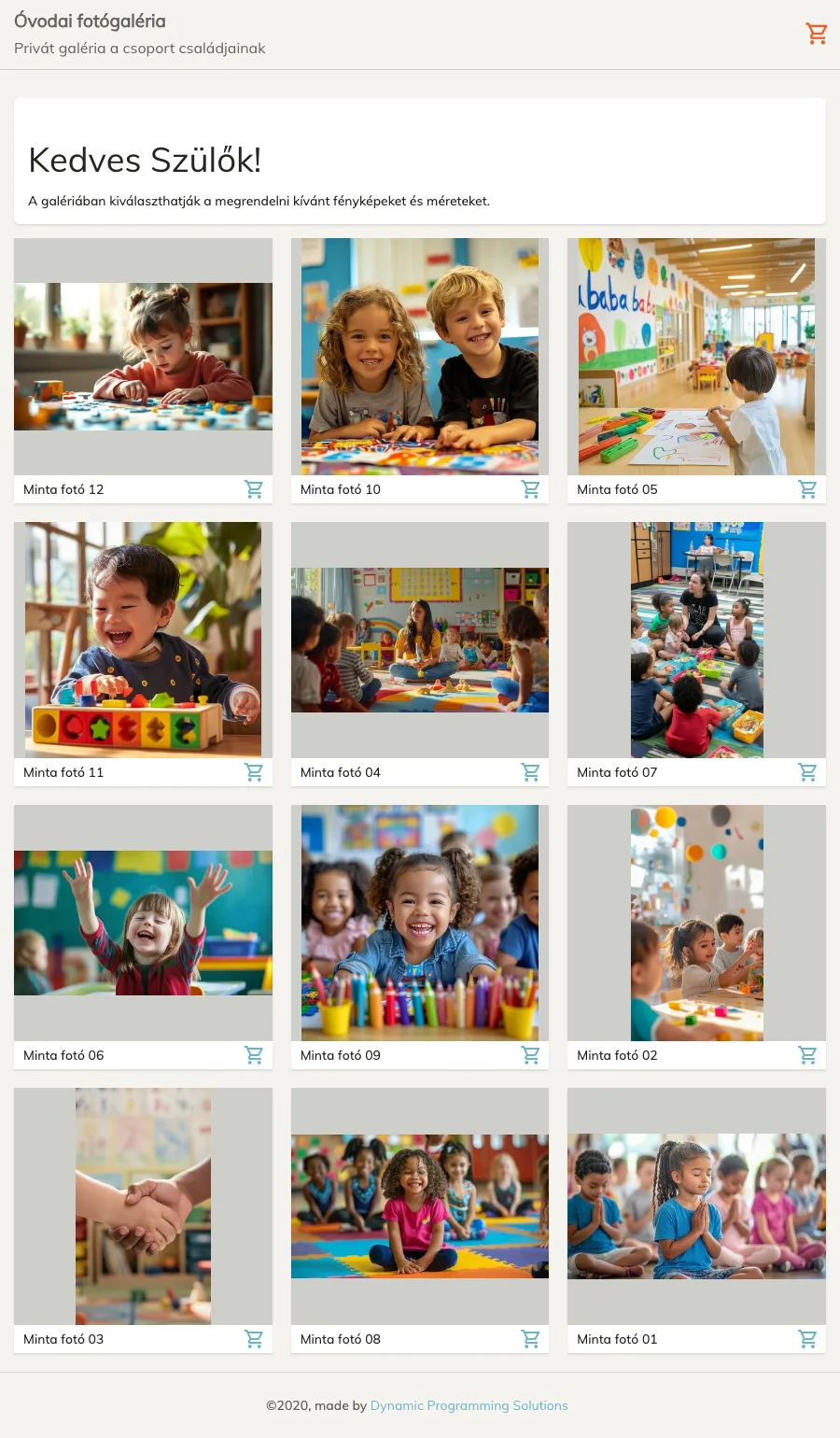
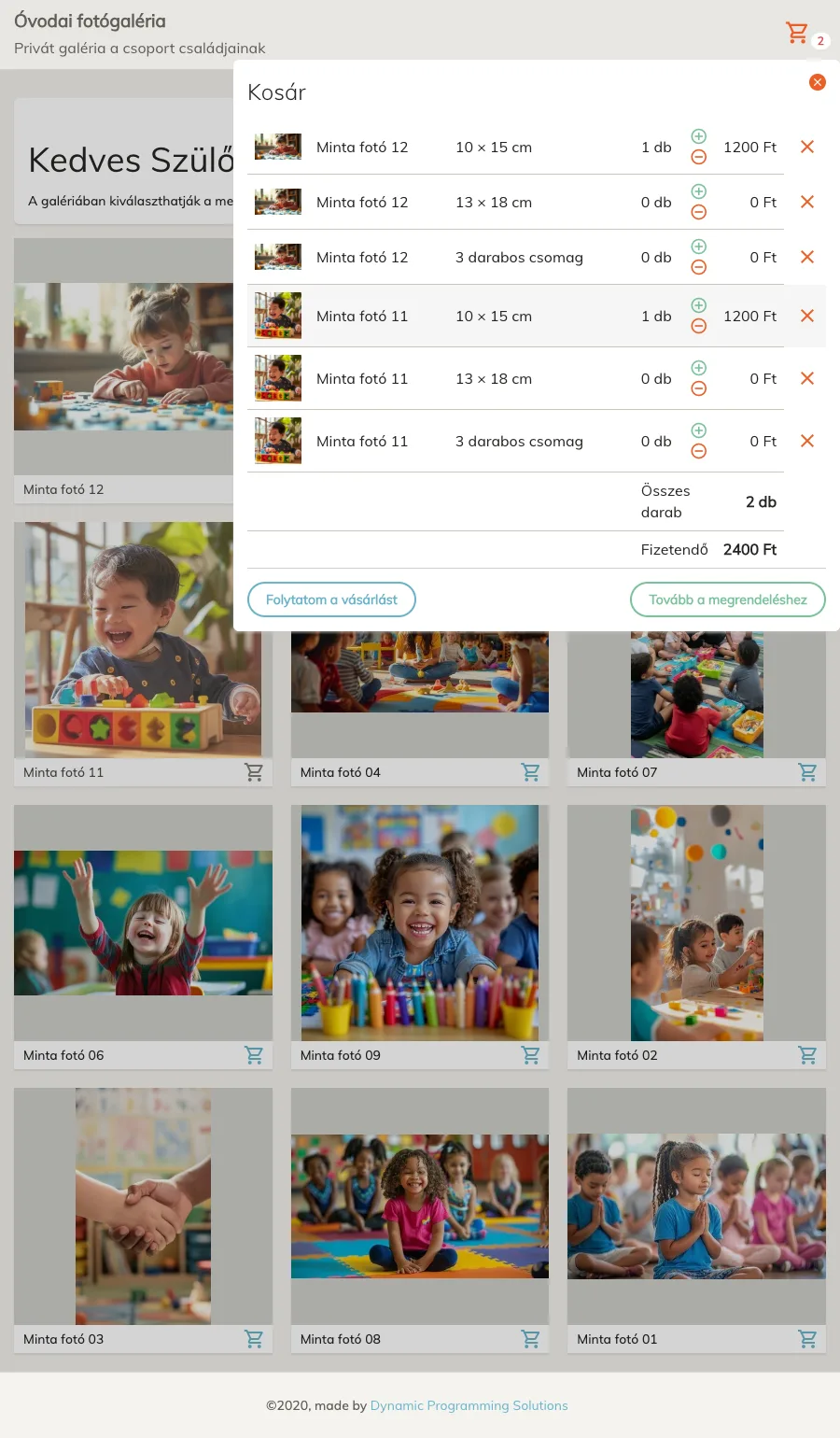
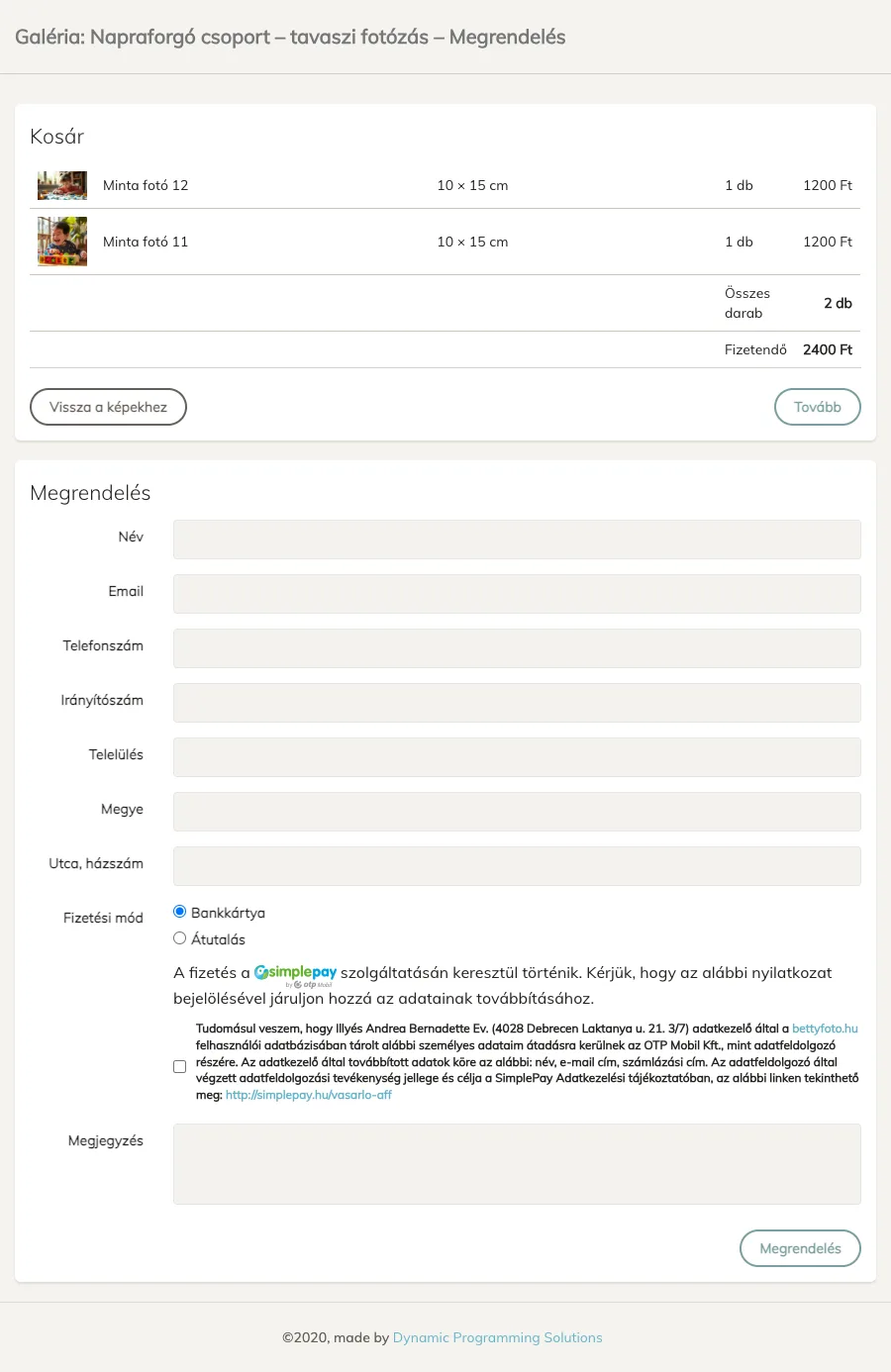
- Parents could review every photograph in the private gallery, select photographs and ordering options, check the cart, then place and pay for the order.
- After the order, the application automatically created and sent the invoice through Számlázz.hu.
- The photographer processed the order through her own workflow.
The goal was not simply to create an online gallery or webshop. Ordering, payment, invoicing and preparation of the photographs all had to be connected so that the same manual administration did not remain behind the online storefront.
Off-the-shelf gallery and ordering systems were not a viable alternative: they charged a percentage commission and did not meet all of the requirements. A general webshop engine could not represent this workflow appropriately either. A focused custom application was therefore the only solution that could follow the required process without those compromises while leaving ownership with the client.
Ordering from a parent's perspective
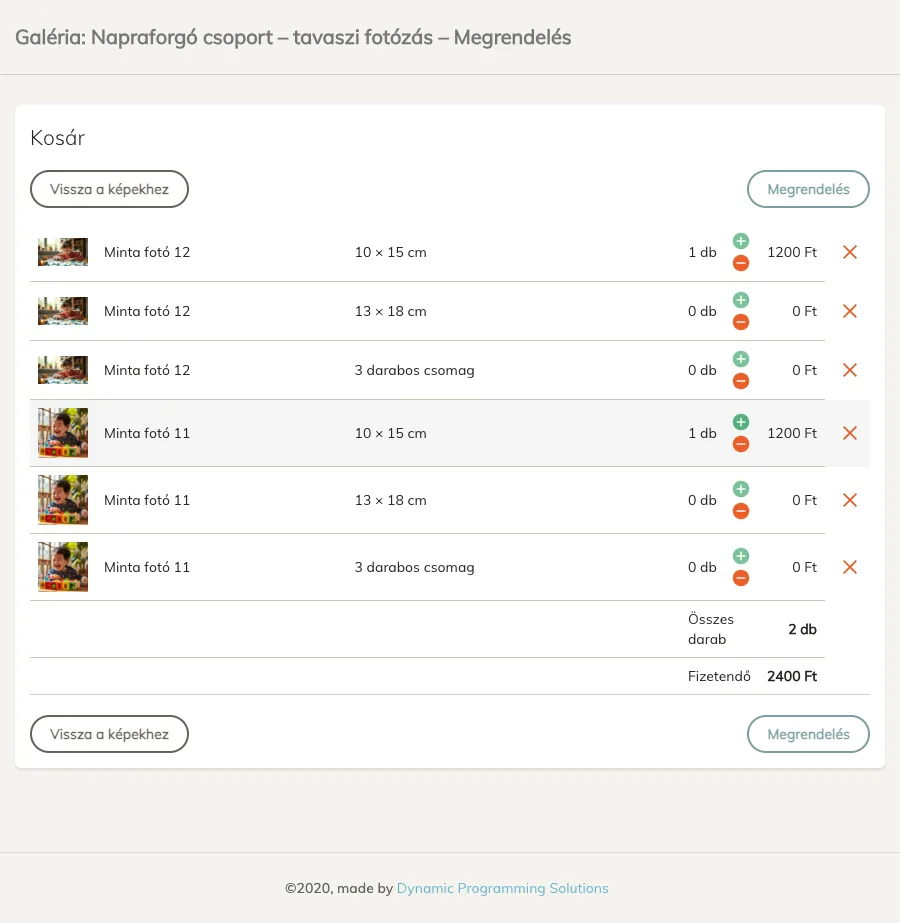
The private gallery, original cart overlay and order page show the first-release ordering flow.
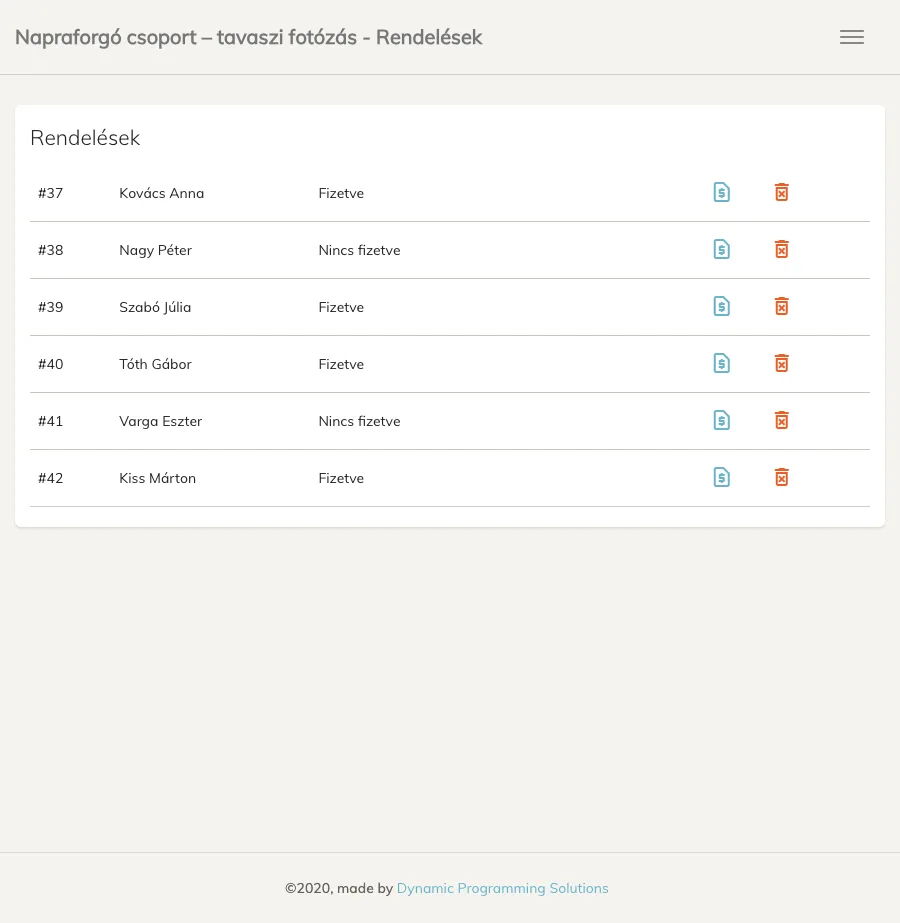
Managing orders from the photographer's perspective
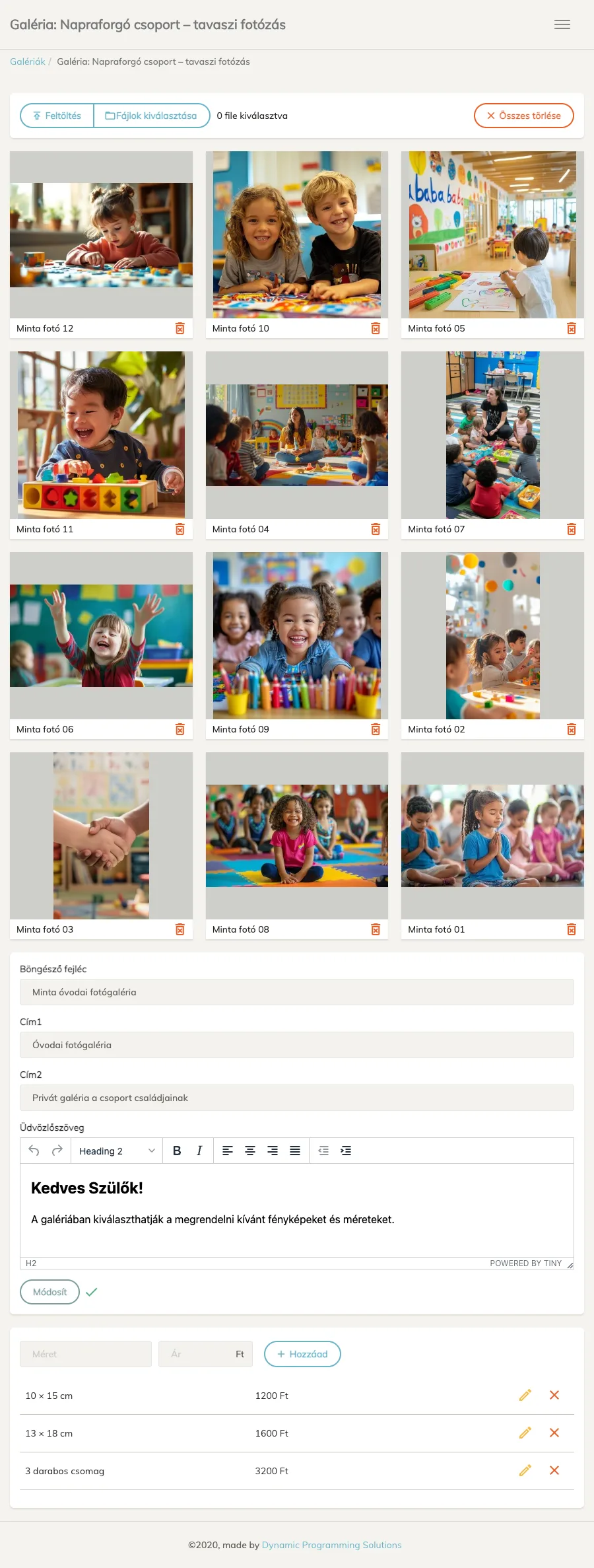
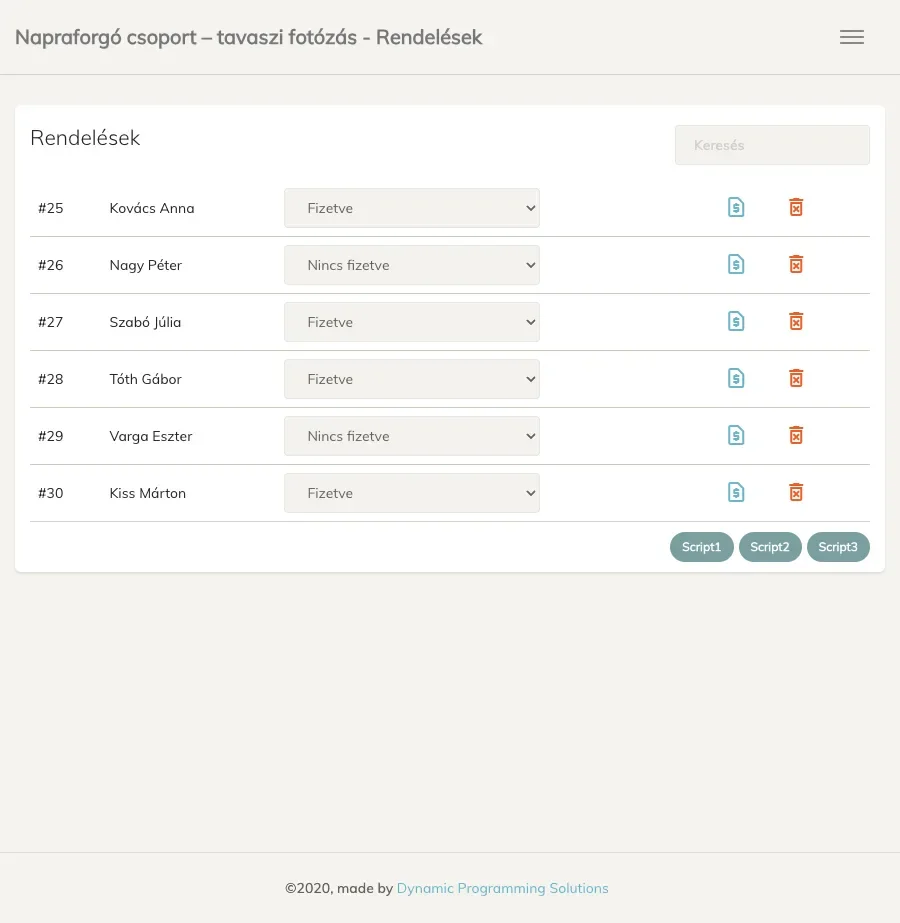
The administration area let the photographer publish galleries, maintain their contents and process incoming orders.

Refinement after release
Once the first release was live, real parents began using it. Their feedback made it easy to see how the cart should behave, so we refined it.
We did not have to predict every later detail in theory. The working application and real use showed what should change, and the custom product could be adjusted accordingly.
Later requests and additions
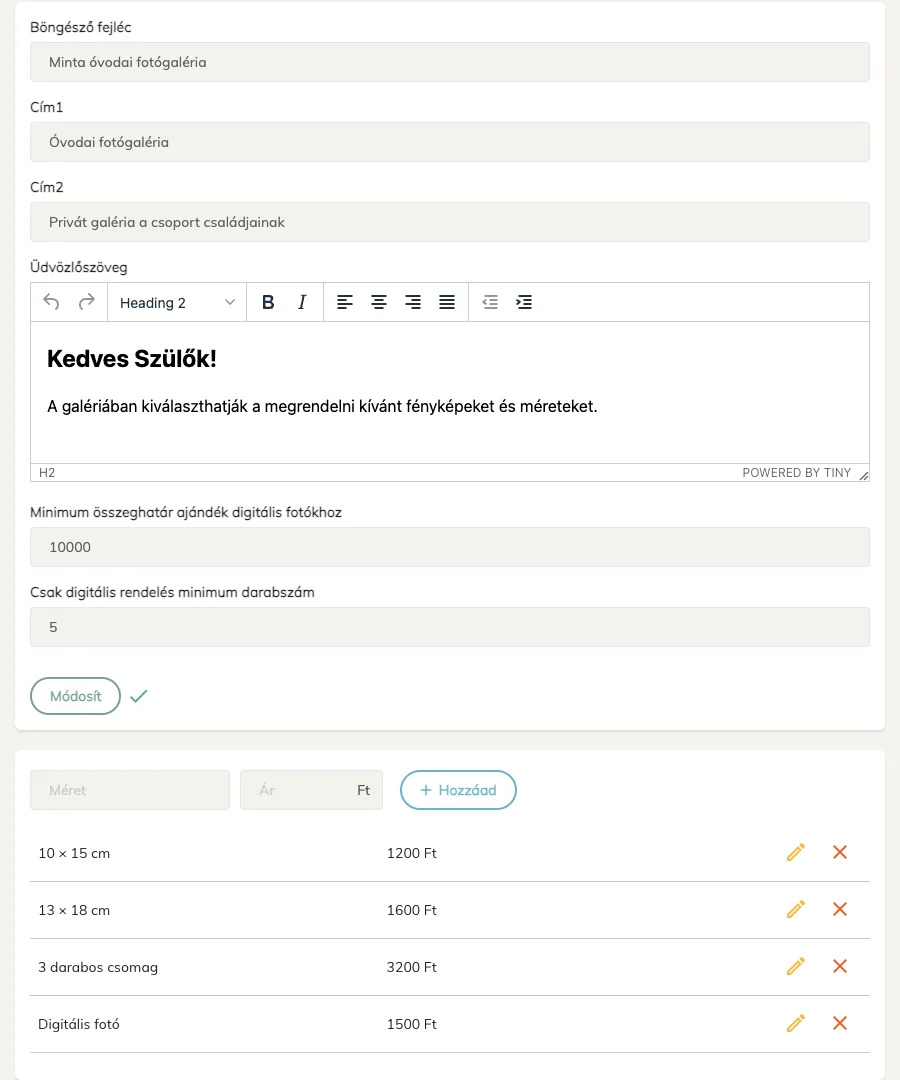
The client returned with new needs after the first working release. An important advantage of having her own system was that these could be added later: this is how digital-photo ordering, rules for complimentary digital versions and a new processing script became part of the application.
- Digital photographs and special rules — the photographer could define the order-value threshold at which customers received digital versions of the ordered photographs at no extra charge, as well as the minimum number of photographs for a digital-only order.
- Automatic sorting of ordered photographs — downloadable scripts collected every ordered file, then organized them by size, customer and quantity. The later Script 3 placed photographs for digital delivery into folders by email address and order ID, processing only orders that met the configured complimentary-version or digital-order conditions.
- Stronger preview protection — as generative image tools became better at using small previews, we added a protected viewer that made obtaining and using the photographs substantially more difficult.
How the system changed everyday operations
The system brought order intake, online payment, invoicing and photograph processing into one connected workflow. The client no longer had to spend weeks each season maintaining records by hand, organizing folders and tracking incoming payments.
Automating most of this administration also removed the need to hire another member of staff. The client could devote her time to photography and her professional work instead.
The institutions no longer had to collect money. Parents could conveniently review every photograph, make their selections and place an order.
Automated data processing also made order fulfillment more reliable. The client recalls only one order error over several years. She also reported that linking payment to online ordering prevented financial losses from orders that had been placed but not paid for.
Why custom development paid off
The client received not only a first working release but custom software of her own that could continue evolving in response to real use and later business needs.
Before development began, another company had offered a system whose use was tied to a percentage commission. She decided against that arrangement and chose custom development shaped around the way her own business operated.
She later said that if she had accepted the percentage-based offer, she would have paid more for its use in a single year than the complete custom application had cost.
This was not achieved by reducing the quality or value of the development. The key to cost efficiency was deliberately implementing only the capabilities she genuinely needed. We did not build every feature of a general photography-sales platform; we built a focused system that served this particular business.
The application finally let me concentrate on photography, and that enabled me to double my turnover. Parents liked being able to order conveniently and choose from every photograph, while the institutions no longer had to collect money. One kindergarten specifically asked me to return because the system made ordering so much easier.
Would you like to automate repetitive administration in your business?
If you can see which tasks repeat, what takes your time and how you would prefer to work, we can help turn that knowledge into a useful first release.
Discuss your project